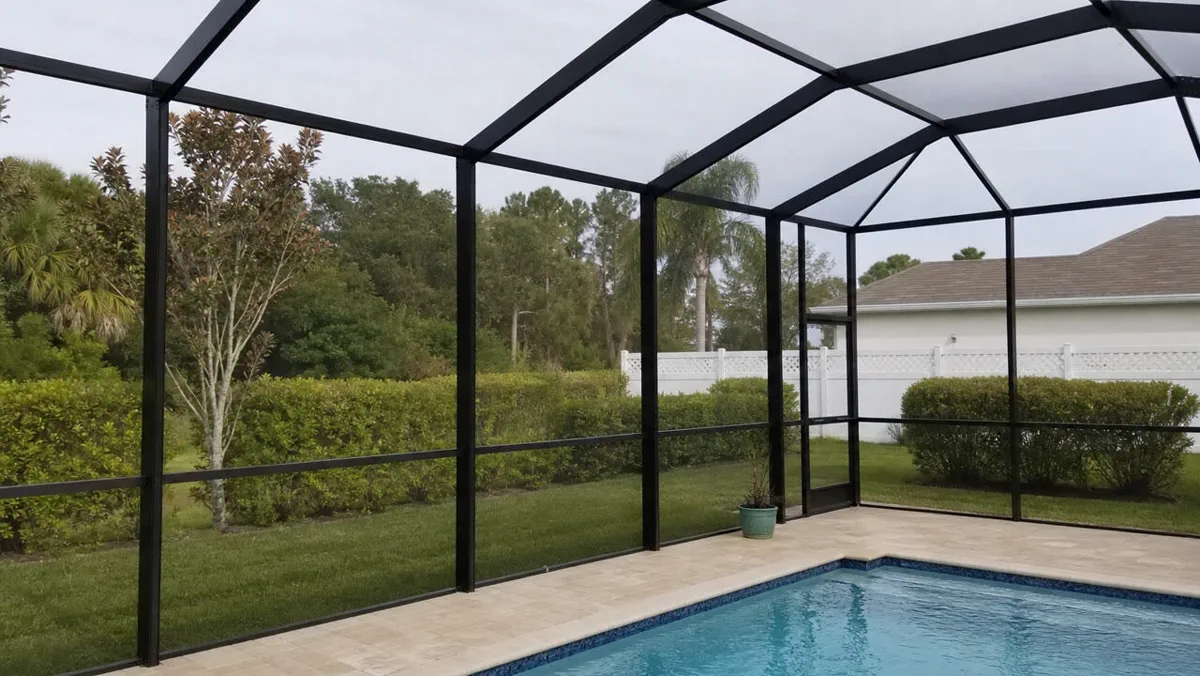
What lanai screens handle
Lanai panels are part of the living space, not just a bug barrier. The repaired panel should sit flat, blend with the surrounding panels, and keep the view from the pool, patio table, or outdoor kitchen from looking patched.
Tall bays need careful tension. Too loose, and wind can work the edge out again. Too tight, and older frame members can bow or make the panel look wavy.
One loose panel beside a pool may need the neighboring bay checked too, because sun-faded mesh can make a single new panel look mismatched if the color difference is strong.
Lanai details that change the repair
- Check tall bay tension and frame condition
- Match adjacent panels when color difference matters
- Inspect corners where wind starts pulling spline
- Use tighter mesh only where insects are the main issue
Other screen repairs to compare
Lanai work can overlap with porch panels and coastal mesh decisions; smaller opening issues may fit the window, door, or pet mesh pages instead.
Questions about lanai screen repair
Can a lanai panel be repaired by itself?
Yes, when the frame and neighboring panels still hold tension. Large brittle sections may need a broader scope so the repair does not look patchy.
What makes lanai panels fail near the coast?
Large openings catch wind, roof-line panels see extra sun, and salt air can make old mesh brittle faster than shaded inland panels.
How should lanai screen tension look?
The panel should be even, not wavy, and not pulled so tight that the frame rails bow or corners look stressed.
When is coastal mesh worth discussing?
Discuss it when the lanai faces open wind, salt air, heavy sun, or repeated fine-insect pressure around the sitting area.